Nearly 1.6 Million Eggs Recalled Over Possible Salmonella Contamination
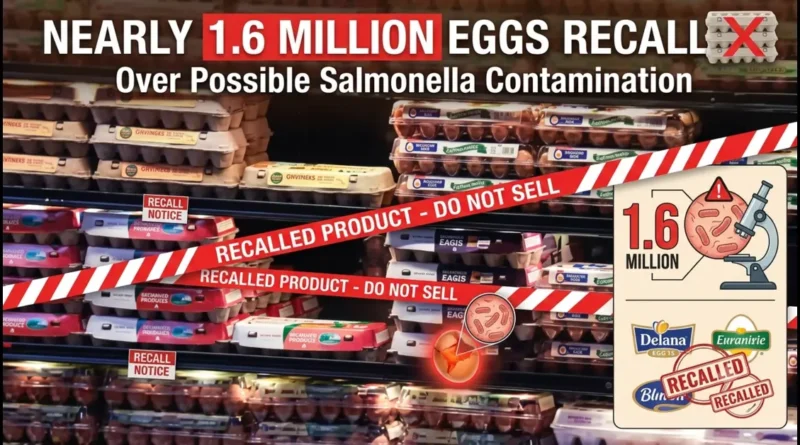
If you’ve bought eggs from Kroger and Brookshire Grocery in the past couple of weeks, you should consider taking a look at your egg carton before cracking another open. Midwest Poultry Services just recalled almost 1.6 million eggs from Texas, Oklahoma, and Louisiana following a test that revealed an alleged connection with Salmonella Enteritidis. This amounts to nearly 19 million eggs in total, which are spread across five brands and distributed at supermarkets as well as restaurants and smaller stores across six states. It’s not a good idea to throw away an entire carton of eggs; however, Salmonella isn’t something you should be betting on, particularly if children and their parents, or people who have a weaker immune system, consume food in your home. This is what was reported: the place it was sold, and the best way to test your own container.
What Eggs Have Been Recalled for Salmonella?
Midwest Poultry Services, L.P. has recalled 1,589,577 dozen eggshells in white and brown cage-free shell eggs due to the possibility of carrying Salmonella Enteritidis. The eggs were created on Midwest Poultry Services’ Texas farm between June 6 and July 3, 2026, and come with sell-by or best-by dates that range from July 20 through August 17, 2026. They were sold to retail and foodservice customers across Texas, Oklahoma, and Louisiana and then ended up on the shelves of Kroger stores across Texas as well as Louisiana, Brookshire Grocery locations all across Texas, Oklahoma, Arkansas, Louisiana, New Mexico, and Mississippi, as well as a couple of smaller retailers. The company claims the problem was discovered during regular environmental monitoring on two of their Texas farms. The company has recently stopped shipping eggs that are fresh from these farms. None of the other Midwest Poultry Services products are affected by this recall.
What Egg Brand Is Being Recalled?
Five names of brands are connected to the egg recall: Kroger, Simple Truth, Brookshire’s, Country Morning, and Sunups. Both eggs with white shells and brown cage-free cartons are included in the recall. Therefore, the colour of the eggs in the carton isn’t a sign of whether or not it’s affected. The most important thing is the name of the brand on the front as well as the codes that are printed on the sides.
How Do You Know If Your Carton Is Part of the Egg Recall?
Find a code for the plant of P-1950 or 0840962 on the outside of the carton, in date-coding ink. It will be accompanied by the Julian date that falls between the ages of 157 and 184. This Julian date is simply the day when the eggs were shipped; therefore, the 157 date is in line with the beginning of June, while 184 is in the middle of July, which is consistent with the window for production Midwest Poultry Services listed. If your egg carton is marked with a different plant code or a Julian date that is not within the time frame, it’s not included in this recall regardless of whether you purchased it from the same retailer. If the numbers match, you shouldn’t eat any of the eggs left, regardless of how fresh they appear or smell.
Why Did Midwest Poultry Services Recall These Eggs?
The company decided to recall eggs to protect itself after tests on the environment conducted at 2 Texas farms revealed concerns about Salmonella Enteritidis contamination. At the time of the announcement, Midwest Poultry Services said it was not aware of any illness related to the eggs that were recalled. This is a significant distinction from past egg recalls, in which the recalls were based on confirmed illnesses rather than being ahead of the curve. However, the FDA considers the possibility of Salmonella Enteritidis contamination seriously enough to make the recall public, and then the company recalled the eggs, rather than waiting for confirmation.
How Does Salmonella Get Inside an Egg?
The Salmonella Enteritidis distinguishes itself from foodborne bacteria in that it is capable of entering eggs before the egg’s shell develops and not only on the outside. The hen who carries the bacteria within her reproductive tract may be able to transmit it into egg yolks and egg whites after the egg begins to grow. That means washing or wiping egg cartons at home will not help the situation. This is why recalls such as this one focus on flocks and farms rather than the egg packaging facility. When eggs are removed from the farm, the only defenses left are cooling and an extensive cooking process, since heat is the primary ingredient in killing bacteria.
What Are the Symptoms of Salmonella Poisoning?
Signs and symptoms of Salmonella include diarrhea, fever, nausea, vomiting, and stomach pain. The symptoms can be present between six and sixty days following exposure. Full recovery is usually achieved in 1 week, without treatment. Children, seniors, pregnant women and those with weakened immune systems are at greater risk of becoming ill and experiencing very severe dehydration, which may necessitate a hospital stay. In very rare instances, bacteria may enter the bloodstream and lead to serious problems such as endocarditis, infected aneurysms and arthritis. If the eggs weren’t recalled and you or your family members have eaten them and are having tummy trouble, it’s best to see a doctor rather than waiting for the symptoms to go away.
How Serious Is This Recall?
The FDA divides recalls into three categories, and where a recall is placed is a good indication of the level of anxiety you should have. Class I includes products in which eating them could result in grave health issues or even death. Class II is applicable in cases where there is a health risk that’s only temporary or irreversible. Class III is reserved for cases likely to cause no harm in any way. The FDA hasn’t yet announced an official class for this Midwest Poultry Services recall as of the date of this article; however, recalls related to Salmonella Enteritidis in eggs are generally classified as Class I because the bacteria can pose a significant danger to children or older adults as well as those with a weak immune system.
What Should You Do If You Have the Recalled Eggs?
Take them off and examine your carton for the codes of the plants and Julian dates listed above. If it is in line with you, then throw them away or take the carton back to the Kroger or Brookshire place where you bought it for a full refund. Clean any pans, bowls, or countertops where eggs are on with soapy, hot water. Raw egg contact can transmit bacteria onto other surfaces, regardless of whether the eggs are thrown away. If you’ve already eaten some of the eggs and you feel well, there’s nothing to panic; however, be on the lookout for symptoms in the next few days. As you go on, cook eggs until whites and yolks are set, and any egg dish is cooked to 160°F, which can kill Salmonella, even if a carton is found to be infected. The yolks are runny, and the homemade Caesar dressing and raw cookie dough are at the more risky end of the spectrum since they do not require sufficient temperature to cause a change.
What Eggs Are Recalled in Canada?
The Texas recall doesn’t go beyond the border. However, Canada has been dealing with its own egg recalls involving Salmonella this year. In April 2026, it was the Canadian Food Inspection Agency that recalled various batches of Supreme brand Liquid Whole Eggs as well as Liquid Egg Whites, which were sold throughout Ontario and Quebec, most often to restaurants, hotels, and institutional kitchens, instead of grocery store shelves. This recall is distinct from that of the Midwest Poultry Services situation and is a completely different product that is a liquid egg product in place of egg shells. If you’re in Canada, make sure to check the recall page of the CFIA in the first place, rather than believing that U.S. codes are in place because the two recalls do not have the same source or distribution chain. Canada has also experienced recalls of shell eggs linked to Salmonella in the past, including one in the early 2025 time frame that included six brands: Golden Valley, Compliments, Foremost, IGA, No Name, as well as Western Family, after a Manitoba farm tested positive for Salmonella. Recalls across both sides of the border typically follow the same pattern. The results of a farm-level test trigger an immediate pullback, long before any person gets sick.
Do Australian Eggs Carry Salmonella?
The presence of Salmonella in eggs isn’t exclusive to eggs in the U.S. Australian health authorities have been tracking Salmonella Enteritidis cases linked to eggs from New South Wales, Victoria, Queensland, and Tasmania. Food safety authorities remain vigilant about the outbreak, even though it’s not considered to be common across the nation. From day to day, the real risk of eating a carton of Australian eggs is very low, and the majority of illnesses are traced back to eggs that have been broken, dirty, or cooked in raw or undercooked dishes like eggnog or mayonnaise made at home instead of being a mass contamination occasion. Cooking the eggs till they reach 71 ° Celsius at their center will kill the bacteria, which is the main cause of illness. If Australian regulators issue a specific recall for a specific product, this procedure is applicable in all other countries to check the batch codes and do not eat anything that is listed.
Checking Your Carton Before Breakfast
The eggs that have been recalled due to Salmonella in March cover five brands that are sold in six states. The solution is easy. Verify the code of the plant along with the Julian date on the carton before using the remaining eggs. Midwest Poultry Services hasn’t linked any illnesses with the eggs being recalled to date; however, symptoms could be present for days before they appear so be cautious now to avoid an illness later. If your eggs match the codes that were recalled, throw it away it away or return them at Kroger or Brookshire to get a refund.
FAQs
What eggs were recalled in connection with Salmonella?
Midwest Poultry Services recalled 1,589,577 dozen cage-free white and brown eggs from Texas from June 6, 2026 to July 3, 2026 due to possible Salmonella Enteritidis contamination.
What egg brand is being recalled?
The recall includes eggs that are sold under Kroger, Simple Truth, Brookshire’s, Country Morning, and Sunups brand names.
What number of eggs were affected by the recall of July 2026?
The total number of eggs recalled is around 1.6 million dozen eggs, which is roughly 19 million eggs in total.
Have you had anyone sickened by the eggs that were recalled?
Midwest Poultry Services said it was unaware of any illness caused by the eggs that were recalled in the days before the announcement.
What can I do if I’ve already used one of the eggs?
Examine the carton that was left over for the manufacturer’s code along with the Julian date. If it’s a match to the recall and you’re feeling well, there’s no reason to be concerned, but keep an eye out for any signs like diarrhea or fever in the next few days.
Are eggs safe to purchase from Kroger and Brookshire at the moment?
Yes. Only eggs with a particular plant code and Julian dates mentioned as part of the recall will be affected, and the stores are still selling eggs that aren’t affected.
Want easy and fast food safety information like this? Be sure to keep up with USA Times Square Business section to avoid getting the latest recalls and consumer alerts before they hit your local news, and check our Lifestyle coverage for tips on how to keep your kitchen safe and secure every day.