
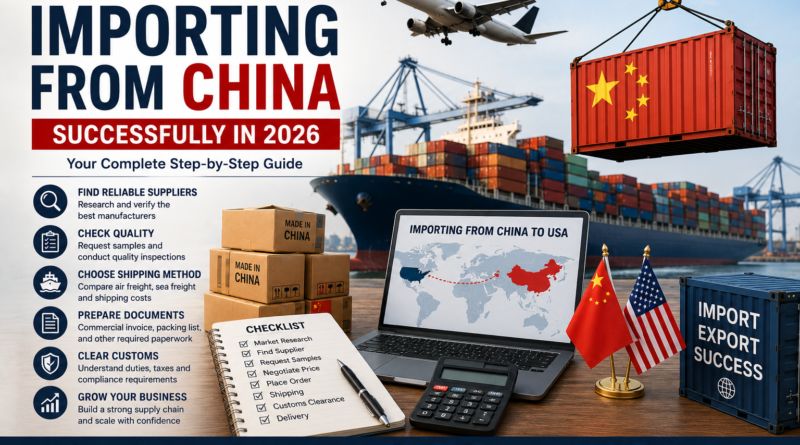
How to Start Importing from China Successfully in 2026
Introduction
For many businesses, importing from China remains one of the most effective ways to access competitive manufacturing, expand product offerings, and improve profit margins. China continues to be a major global production hub, supplying products across industries such as electronics, home goods, machinery, apparel, automotive parts, and consumer products.
However, successful importing requires more than simply finding a supplier and placing an order. Businesses must understand sourcing, supplier verification, shipping options, customs procedures, product compliance, and overall supply chain management. Without proper planning, importers can face delays, unexpected costs, quality issues, and compliance challenges.
The good news is that businesses that approach importing strategically can build reliable supply chains and create long-term growth opportunities. Whether you are a first-time importer or looking to improve your current sourcing process, understanding the fundamentals of importing from China to USA is essential in 2026.
Why Businesses Continue Importing from China
China remains a preferred sourcing destination for businesses around the world because of its manufacturing capabilities and extensive supplier network.
Key advantages include:
- Competitive production costs
- Large manufacturing capacity
- Diverse product categories
- Advanced production facilities
- Established export infrastructure
- Flexible production volumes
These advantages make importing a practical option for businesses seeking both affordability and scalability.
Define Your Product Strategy
Before contacting suppliers, determine exactly what products you plan to import.
Consider the following questions:
- Who is your target customer?
- What problem does the product solve?
- Is there consistent market demand?
- Can the product generate healthy margins?
- Are there import restrictions?
A clear product strategy helps prevent costly purchasing mistakes and improves sourcing efficiency.
Research the Market Carefully
Successful importers understand their market before placing orders.
Research should include:
- Competitor analysis
- Product pricing
- Customer demand
- Seasonal trends
- Industry regulations
Businesses that invest time in market research often make more informed purchasing decisions.
Find Reliable Suppliers
Supplier selection is one of the most important steps in importing from China.
A reliable supplier can contribute to long-term success, while an unreliable supplier can create significant challenges.
When evaluating suppliers, consider:
- Business experience
- Manufacturing capabilities
- Product quality
- Communication responsiveness
- Production capacity
- Customer references
Requesting samples before placing larger orders helps verify product quality and supplier reliability.
Verify Supplier Credentials
Not all suppliers operate with the same standards.
Before entering into a business relationship, verify:
- Business registration information
- Manufacturing certifications
- Export experience
- Quality management processes
- Product compliance documentation
Verification reduces risk and helps businesses avoid costly sourcing problems.
Understand Product Compliance Requirements
Different products may require compliance with specific regulations before entering the United States.
Depending on the product category, businesses may need to consider:
- Safety standards
- Labeling requirements
- Product testing
- Certification requirements
- Environmental regulations
Researching these requirements before ordering inventory can prevent delays and customs complications.
Calculate Total Landed Costs
Many first-time importers focus only on product pricing.
In reality, the total landed cost includes every expense associated with bringing products into the country.
Typical costs include:
- Product purchase price
- International freight
- Insurance
- Customs duties
- Import fees
- Warehousing
- Domestic transportation
- Packaging expenses
Calculating landed costs early helps businesses set realistic pricing and maintain profitability.
Choose the Right Shipping Method
Transportation plays a major role in both costs and delivery timelines.
Air Freight
Air freight is suitable for:
- Urgent shipments
- High-value products
- Smaller orders
Advantages include faster transit times and improved delivery reliability.
Sea Freight
Sea freight is often preferred for:
- Large shipments
- Heavy cargo
- Cost-sensitive imports
Although transit times are longer, sea freight generally provides lower transportation costs.
Prepare Import Documentation
Accurate paperwork is essential when importing from China to USA.
Common import documents include:
- Commercial invoice
- Packing list
- Bill of lading
- Customs entry documentation
- Product certificates when required
Ensuring all information is accurate helps prevent customs delays and additional charges.
Understand Customs Procedures
Every imported shipment must pass through customs.
Businesses should understand:
- Product classification
- Customs valuation
- Documentation requirements
- Inspection procedures
- Applicable duties and fees
Preparation before shipment helps streamline customs clearance and minimize disruptions.
Protect Product Quality
Product quality can directly impact customer satisfaction and business reputation.
Quality control measures may include:
- Sample evaluations
- Production inspections
- Pre-shipment inspections
- Packaging reviews
Investing in quality verification often costs less than dealing with defective inventory after delivery.
Build Strong Supplier Relationships
Successful importing depends on more than transactions.
Strong supplier relationships can lead to:
- Better communication
- Improved product quality
- Faster issue resolution
- Greater production flexibility
- More consistent delivery performance
Long-term partnerships often create operational advantages for both parties.
Manage Supply Chain Risks
International trade always involves uncertainty.
Common risks include:
- Production delays
- Shipping disruptions
- Port congestion
- Regulatory changes
- Supplier issues
Businesses can reduce risk by maintaining inventory buffers, diversifying suppliers, and monitoring market conditions regularly.
Use Technology to Improve Operations
Modern technology makes importing more efficient than ever.
Businesses increasingly use digital tools for:
- Inventory management
- Shipment tracking
- Supplier communication
- Purchase order management
- Documentation storage
Technology improves visibility across the supply chain and supports better decision-making.
Common Mistakes New Importers Should Avoid
Many challenges associated with importing from China are preventable.
Common mistakes include:
Choosing Suppliers Based Only on Price
The lowest price does not always provide the best value.
Skipping Product Samples
Samples help identify quality issues before committing to larger orders.
Ignoring Compliance Requirements
Regulatory problems can delay shipments and increase costs.
Underestimating Total Costs
Unexpected expenses can quickly reduce profitability.
Poor Inventory Planning
Insufficient planning often leads to emergency shipping costs and stock shortages.
Avoiding these mistakes improves the likelihood of successful importing.
Best Practices for Long-Term Success
Businesses that consistently succeed with importing from China to USA often follow a disciplined process.
Key best practices include:
- Conduct thorough market research.
- Verify suppliers carefully.
- Calculate landed costs accurately.
- Understand regulatory requirements.
- Maintain organized documentation.
- Plan inventory proactively.
- Monitor shipping performance.
- Invest in quality control.
- Review supply chain performance regularly.
These habits create a stronger foundation for sustainable growth.
Future Trends in Importing from China
Global trade continues to evolve.
Several trends are expected to influence importing strategies in 2026 and beyond:
- Increased supply chain visibility
- Greater use of automation
- Digital customs documentation
- Enhanced shipment tracking
- Improved inventory analytics
- Stronger focus on supply chain resilience
Businesses that adapt to these changes will be better positioned to compete in a rapidly changing marketplace.
Conclusion
Successful importing from China requires careful planning, informed decision-making, and consistent execution. While the opportunities are significant, businesses must take time to understand supplier selection, product compliance, shipping logistics, customs procedures, and total landed costs.
Companies that develop a structured approach to importing from China to USA are more likely to reduce risks, control expenses, and build reliable supply chains. By focusing on preparation, quality control, and long-term supplier relationships, businesses can create a strong foundation for growth in 2026 and beyond.
Importing is not simply about finding low-cost products. It is about building an efficient and sustainable sourcing strategy that supports long-term business success.
Frequently Asked Questions
What is the first step when importing from China?
The first step is identifying a product opportunity and researching market demand before contacting suppliers.
How can businesses find reliable suppliers in China?
Businesses should evaluate supplier experience, verify credentials, request samples, and review production capabilities before placing orders.
What documents are required when importing from China to USA?
Typical documents include a commercial invoice, packing list, bill of lading, customs entry forms, and any required compliance certificates.
How can importers reduce risks when importing from China?
Supplier verification, product inspections, compliance research, and accurate cost calculations help reduce importing risks.
Is importing from China still profitable in 2026?
For many businesses, importing remains profitable when products are sourced strategically, costs are managed carefully, and supply chains are monitored effectively.
Learn more practical importing guides, sourcing tips, and business growth insights with USA Times Square to build a smarter and more reliable supply chain.